
Costs
Part of Social media holidays with verified dates and sources: the 2027 view
Social media holidays research: a design you can run
Social media holidays research you can run: the seasonal confound, a matched holdout, named observances and surfaces, and what a year of pairs will license.
Suppose you want to know whether themed-day posting works for you. Not in general: for you, on your surfaces, with your audience.
Social media holidays research of this kind is answerable, unlike almost everything else in this subject. It costs a year and a small amount of discipline. This page sets out the design, the confound that ruins most attempts, and what the result will and will not license you to say.
The dates in question are the familiar ones: Giving Tuesday, Star Wars Day on May 4, International Women's Day on March 8, Earth Day on April 22, Halloween, Black Friday and Small Business Saturday. The surfaces are the ones you already publish on: an Instagram feed post, a Story, a TikTok, a LinkedIn update, a post on X, a Facebook page post or a Pinterest pin. Each date-and-surface pairing is its own small test, which is why the design below is written per post rather than per account.
What to take away
- The season is the confound. Observances sit at fixed points in a year whose baseline is already moving, so any naive before-and-after measures the calendar.
- The comparison has to be against posts you actually made, not against an average. A holdout is the whole design.
- One year gives you one observation per date. Plan for that from the start rather than discovering it in December.
The confound, stated plainly
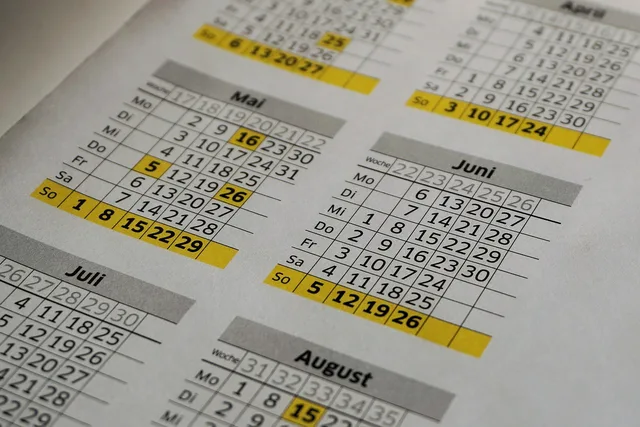
Your numbers have an annual shape. Audiences are quieter in some months, busier in others, and the pattern repeats. Observances are placed inside that shape at fixed points, which means the day and the season arrive together every time.
A themed post in a busy week looks good; in a dead week it looks poor. The day does not matter.
Comparing that post with your monthly average puts two points in the annual cycle side by side. Official statistics handle this with seasonal adjustment — the U.S. Census Bureau's X-13ARIMA-SEATS is the standard tool, and the Bureau of Labor Statistics applies the same family of methods to its monthly jobs figures. The procedure shows how little a casual eyeball comparison is worth here.
There is a second, sharper version. If a date is popular, other people are also publishing about it, so the competition for attention that day is unusually high.
The date therefore changes both your audience's availability and the supply they are choosing from, and those two effects can point in opposite directions. That crowding is the main argument in why chasing a themed day rarely pays.
The design
| Element | What to do | Why |
|---|---|---|
| Unit | One post, on one surface | Mixing surfaces mixes two different mechanisms |
| Treatment | A themed post tied to a specific date | Defined before you see any numbers |
| Control | An ordinary post in the same week, same surface, comparable effort | Holds the week roughly constant |
| Outcome | One measure, chosen in advance | Choosing afterward guarantees a finding |
| Period | Same window after publication for both | Different windows are not comparable |
| Record | What you expected, written before you looked | The only defense against fitting a story |
The control is the part people skip and the part that makes it work. An ordinary post published in the same week faces the same seasonal conditions, the same audience availability, and roughly the same competition from your own material.
Matched pair design checklist
- Unitone post, one surface
- Treatmentthemed post, specific date
- Controlordinary post, same week
- Outcomeone measure, chosen in advance
- Periodsame window after publication
- Recordexpectation written before looking
It is not a clean control, since you cannot randomize which post gets the day, but it removes the largest confound at almost no cost. Building a split that cannot flatter you is the wider subject of designing a test you can read.
Effort has to be matched too, and this is where good intentions fail. A themed post that got three hours of work compared against an ordinary post that got twenty minutes measures the effort. If you cannot match effort, record the difference and treat the result as an upper bound.
The order of operations:
- Fix the dates before the year starts, taken from a reference calendar such as Chase's Calendar of Events or the National Day Calendar site.
- For each date, publish the themed post on one named surfaceInstagram feed, TikTok or LinkedIn, say — and pair it with an ordinary post on the same surface in the same week.
- Log every pair in the same place all year. Native dashboards such as Meta Business Suite and TikTok Analytics will do it; a listening tool such as Brandwatch or Sprout Social helps when you need history across surfaces.
- At the end of the year, compare each themed post with its matched ordinary post and count the directions, not the sizes.
What the result licenses
After a year you will have somewhere between four and twelve paired observations, depending on how many dates you tried. That is a small number and it should be treated as one, which is the whole content of sample size determination applied to a calendar.
What a year of pairs licenses
4-12 paired observations
Licenses a direction only
No effect size
One observation per date is a story
It licenses a direction: themed posts on your surfaces tended to do better, worse, or about the same as matched ordinary posts. It does not license an effect size, and it does not license a claim about which dates work, because you will have one observation per date and one observation is a story.
The general point about what a small, uncontrolled comparison can carry does not change because the subject is a calendar.
The most likely result is no visible difference. That is a real finding and the most useful one, because it converts a recurring annual decision into a settled one and frees the slots.
What it costs in time
The expense here is a year of matched publishing rather than a line item, and it is worth pricing before you start.
You are committing to a year of matched pairs, which means constraining a year of publishing decisions to keep the comparison valid. Every time you deviate, you lose a pair. Most attempts fail here rather than at the analysis.
You are also committing to publishing some themed posts you would otherwise have declined. If your prior is already that most days are not worth it, the honest question is whether the study is worth more than acting on that prior directly, and worked examples of holiday decisions show how that trade-off plays out.
The lower-effort alternative is to run it on two or three dates rather than twelve, accept that the result is weaker, and stop. That is a defensible trade, and what most operations should do.
Common questions
Can I use last year's numbers instead of running a study?
Only if you happened to publish matched ordinary posts in the same weeks, which you almost certainly did not. Retrospective comparison against whatever you happened to post is the design without the control, and it will find whatever you are hoping for.
Why not compare against other accounts posting on the same day?
Because you would be comparing audiences, surfaces and effort at once, with no way to separate them. Nothing in the result would be attributable to the day.
What if the effect is real but small?
Then you will not detect it, and you should say so rather than reporting the direction you happened to see. A design with a handful of pairs can only find large effects, which is what statistical power measures, and it is worth stating before you start.
Does this tell me anything about which days to pick next year?
No, and this is the most common overreach. It tells you about themed posting as a practice on your property. Which specific day works is a question your sample cannot answer, and the provenance of the holiday list is a better guide to that than any number you will produce.