Rules
Social media holidays with verified dates and sources: the 2027 view
Social media holidays for 2027, with the dates that hold and the sources behind them, plus how to check a day, platform by platform, before you plan a post.
What to take away
- Fifteen observances below carry a named owner, from the United Nations to Emojipedia.
- Fixed dates hold for 2027. Ramadan, Lunar New Year and Easter are projections until their calendar bodies reconfirm them.
- A published calendar lists candidates, not a schedule. Trace each entry to the body that runs it.
- A themed day earns a slot only when it fits your subject, your audience already observes it, and the post would stand without it.
The 2027 dates with a named owner
Each row names the body that runs the day. If the day does not appear on that body's own site, treat the entry as unverified.
| Date (2027) | Observance | Who runs it | Reach |
|---|---|---|---|
| January 28 | Data Privacy Day | Council of Europe; IAPP and NIST | US, Europe |
| February 4 | World Cancer Day | Union for International Cancer Control | Global |
| February 6 | Lunar New Year | East and Southeast Asian calendars | Global |
| February 8 to March 9 | Ramadan | Local moon sighting authorities | Global |
| March 8 | International Women's Day | United Nations since 1975 | Global |
| March 28 | Easter Sunday | Christian church calendars | US, global |
| April 22 | Earth Day | EarthDay.org, observed since 1970 | US, global |
| April 23 | World Book Day | UNESCO | Global |
| May 3 | World Press Freedom Day | UNESCO | Global |
| June 5 | World Environment Day | UN Environment Programme | Global |
| June 30 | Social Media Day | Mashable, launched 2010 | Mainly US |
| July 17 | World Emoji Day | Emojipedia, since 2014 | Global |
| October 10 | World Mental Health Day | World Health Organization | Global |
| November 30 | GivingTuesday | GivingTuesday, founded 2012 | US, Canada |
| December 10 | Human Rights Day | United Nations | Global |
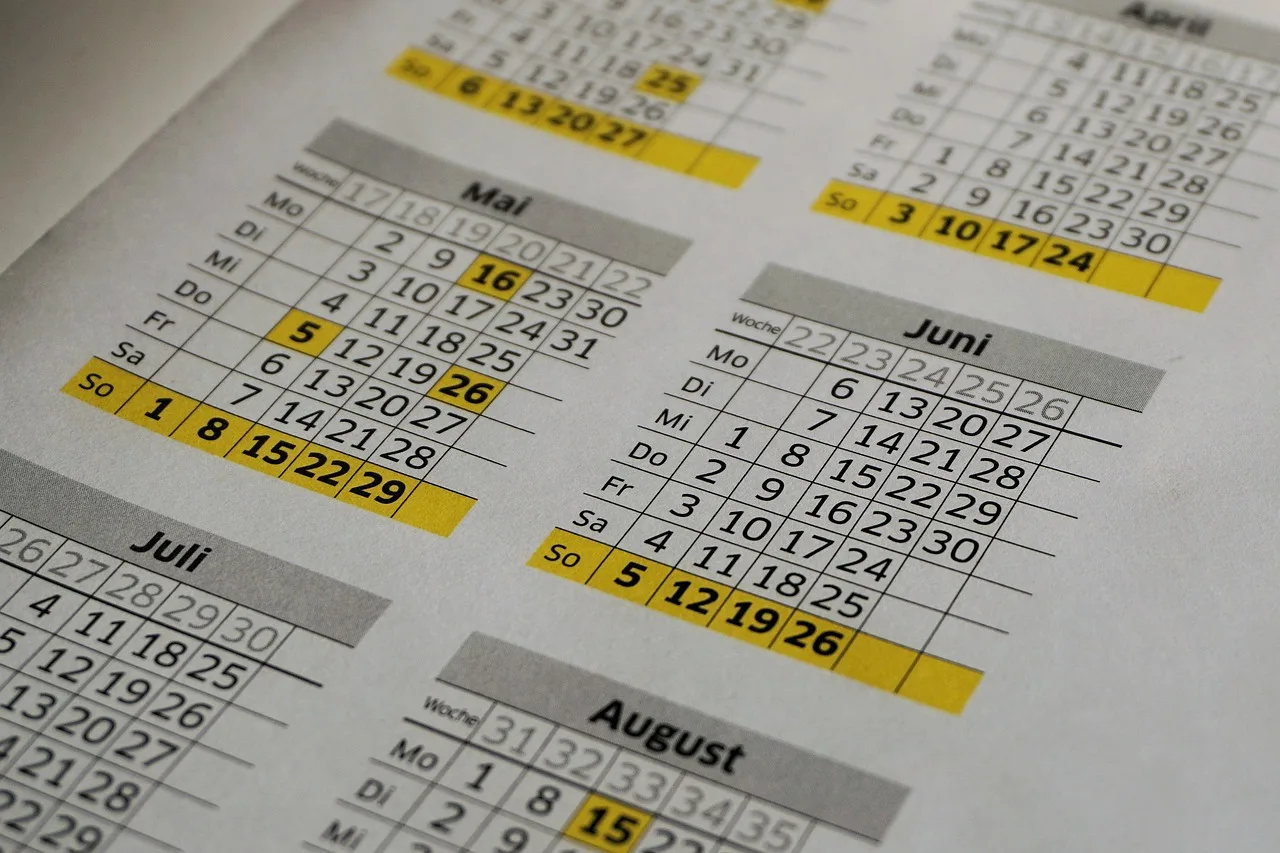
Fixed dates you can plan a year ahead. The moving ones follow a lunar or religious calendar, so a version printed without a year is already wrong.
Awareness months are safer than awareness days, because the window is thirty days. January is Cervical Health Awareness Month. October is Cybersecurity Awareness Month.
Platform-invented moments arrive with a product push and vanish with it. Your own record of product changes is where those appear, because they come as announcements, not calendar entries.
Caveat: the 2027 dates for Ramadan, Lunar New Year and Easter are projections. Reconfirm them with the body that sets each calendar before you commit a campaign.
How to verify a date before you plan
- Find the organization that claims to run the day, not the calendar that listed it.
- Open that organization's own site and search for the day's name.
- Check the page for a year. A page with no year may describe an old edition.
- For UN observances, use the UN international days list, which covers UNESCO, WHO and UNEP entries.
- If the trail ends at a press release or a paid listing, file the day as a marketing device.
Government and religious observances are set by statute or long custom, and a public holiday changes whether people are at work.
Charities and international bodies run awareness campaigns. Companies register brand days, often on a calendar that charges for the listing. Platforms invent moments; communities keep rituals nobody publishes.
[figure 1]
Five sources of calendar days
Public and legal
- Who decides
- Governments, religious bodies
- What it means
- Real, people off work
- How to verify
- Official published list
Awareness
- Who decides
- Charities, professional bodies
- What it means
- Real for that community
- How to verify
- Organization's own site
Brand-invented
- Who decides
- A company
- What it means
- A marketing device
- How to verify
- Who first announced it
Community rituals
- Who decides
- Nobody
- What it means
- Most genuine kind
- How to verify
- Being in the community
When calendars copy each other, repetition passes for confirmation, a pattern called circular reporting.
A verified date is still not a feed slot, and how a feed chooses what to show does not change because a holiday is marked.
Platform campaigns and where they are announced
A platform campaign is live while the platform pushes it, then it stops. The announcement is the only reliable sign that a moment is real.
- Meta Newsroom and the Instagram Creators account.
- TikTok Newsroom and TikTok Creative Center.
- LinkedIn News and the LinkedIn Marketing Blog.
- YouTube Official Blog and Creator Insider.
Three conditions a themed day has to pass
- It belongs to your subject. Not adjacent, not joined by a pun. Your audience and the day's audience overlap heavily.
- Your audience already observes it. Past numbers or their own questions are the evidence. If you have to explain the day, they do not observe it.
- You can make something good without the day. The date gives you a reason to publish work you were making anyway.
[figure 2]
Is this themed day worth it?
Does it belong to your subject?
publish with confidence
skip it
All three have to hold. Two of three is a reason to publish something else that day, and what it infers from behavior does not shift because a date is marked.
Why most themed days do not pay
Everyone holds the same list. A themed day is a coordination point, and the coordination is the problem. Supply rises on the date and the feed's slots do not.
Your audience did not ask. A day lives on a calendar, not in your reader's mind. Unless they already mark it, your post interrupts with a label attached.
The window is one day. Whatever you make must be finished before it, and it meets its heaviest competition that day.
Awareness days hold one further trap. Commercial use ranges from welcome to offensive, and the cause decides which. If a brand pays you to post, the FTC guidance on influencer disclosures applies.
Building a calendar from your own audience
An afternoon with your own numbers beats any published list.
- Pull monthly figures for as many past years as you have. The repeating peaks are your seasonality.
- Write down your audience's own eventstheir year start, their busy season, the moment they buy.
- Add your own cyclelaunches, anniversaries, work you make on a schedule.
- Take from compiled calendars only the entries that pass the three conditions.
- Leave gaps.
Check the result against a year of your content and see where the content trends you joined actually landed. Trends are the calendar nobody can print in advance.
Common questions
Which 2027 dates are safest to book production against?
What about the days missing from that table?
A day appears on twenty calendars. Is it real?
Are awareness days free to use in commercial posts?
In this guide
- How to decide whether to post on social media holidays: six invented situationsA guide to deciding whether to post on a social media holiday, through six invented situations with each decision, the reasoning, and the fact that would reverse it.
- Social media holidays: six origins and a five-minute checkSocial media holidays platforms and provenance: the six origins a date can have, a five-minute traceback, and why listing counts prove nothing at all.
- Social media holidays statistics: what can be countedSocial media holidays statistics: the days, their publishers and the figures that exist — plus why participation numbers cannot honestly be published.
- 5 pointers on social media holidays trends that hold upFive pointers on social media holidays trends that hold up, from unpriced declarations to the smaller owned calendar that beats any crowded national day.
- Social media holidays research: a design you can runSocial media holidays research you can run: the seasonal confound, a matched holdout, named observances and surfaces, and what a year of pairs will license.